
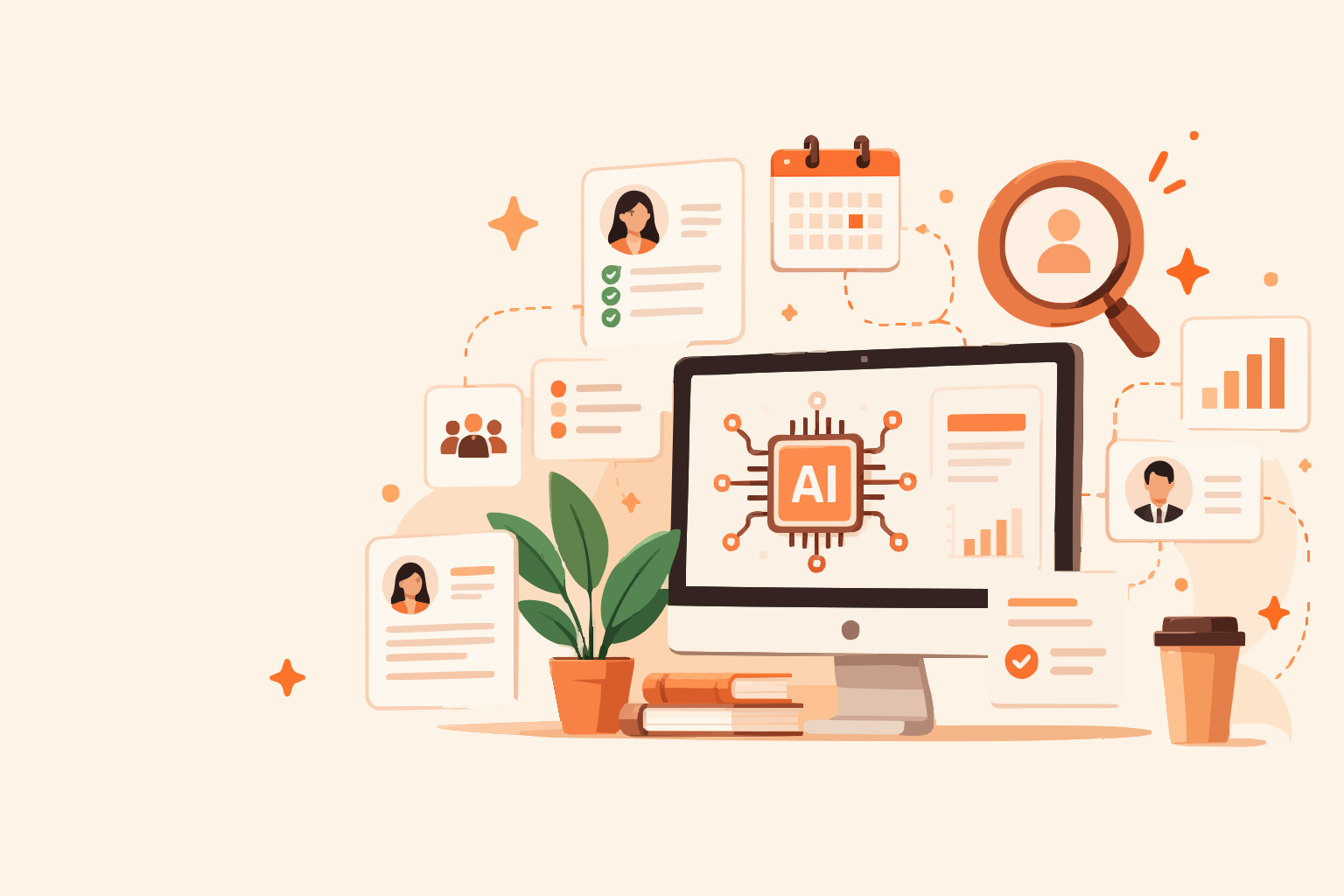
Hiring can take a lot of time. A lot of manual tasks are involved in the hiring process. From reading hundreds of resumes, shortlisting candidates, scheduling interviews, and sending follow-up messages to keeping track of every application, a recruiter has to do all of these tasks manually. For a small or growing company, this work is time-consuming and can delay other more important tasks.
This is where the benefits of AI in recruitment prove to be a boon. With the help of AI, recruiters can screen resumes faster with less manual work, better candidate matching, and quicker communication, which makes the hiring process more organised. AI basically helps you with repetitive manual tasks.
But this does not mean that AI should replace recruiters. In most AI-assisted hiring processes, technology is there to support the recruiter and not overpower them.
For companies that hire only a few people each year, the important question is not whether AI is useful. The better question is whether AI is actually fulfilling the company's hiring needs by saving time and cost.
Why AI Recruitment Is Growing in India
AI recruitment is no longer limited to large global companies. Indian employers are also using AI and automation at different stages of hiring.
Deloitte India studied 257 companies and 505 college campuses in India. Here's what they found about AI in hiring:
- 86 out of 100 companies say AI or Agentic AI is now changing how they hire people.
- The most common use is screening resumes. 72 out of 100 companies use AI to shortlist resumes.
Other uses of AI in hiring include:
- 48% use AI to assess candidates
- 37% use AI to communicate with candidates
- 33% use AI to predict who's a good hire
AI video interviews are also becoming popular as a new way to screen candidates.
In short, almost 9 out of 10 companies in India now use AI somewhere in their hiring process, mostly to filter resumes first, then to test and evaluate candidates.
A separate 2026 academic study found that Indian IT companies have started incorporating AI into their hiring process, like job posting, sourcing, resume screening, interview scheduling, interviewing, and onboarding.
Another study surveyed 126 companies in eight Tier-1 Indian cities across IT, finance, legal and higher education. The study was to see if the companies were ready to use an AI system for their hiring process. Out of the 126 companies, 63 showed interest in the proposed system and another 44 wanted to try it.
These studies show one thing clearly: Indian companies are using AI for the hiring process, especially in areas where recruiters have to handle a large number of applications.
What Are the Benefits of AI in Recruitment?
AI can help at different stages of hiring. The exact benefits depend on the tool and how the company uses it. AI can:
- Make resume screening faster
For a company that receives a large number of applications, resume screening can be a long, tiring process.
AI screening software can do that much faster than a person can. It can look for necessary information and other requirements set for the job.
For a small hiring team, this can reduce the amount of time spent on the first round of screening.
Contextual ranking is a recent advance in CV screening. It goes beyond keyword matching to understand the context and give a CV score with a rationale.
- Reduce repetitive work
Recruiters don't only read resumes. They also post jobs, answer basic questions, schedule interviews, send reminders and update candidates.
Many of these tasks are repetitive each time.
AI and automation can make some of this routine work easier. For example, a system can send an interview invitation after a candidate clears an initial stage. It can also answer simple candidate questions through a chatbot.
Voice AI can also be used to screen communication skills and collect basic information about the candidate.
This helps recruiters focus on work that needs human judgment.
- Help match candidates with jobs
As a recruiter, you may receive resumes from people with different job titles but similar skills.
For example, one candidate may call themselves a “Sales Executive” while another may use the title “Business Development Executive.” Their actual skills may overlap.
But AI tools can compare the skills and experience mentioned in a resume based on the job requirement. This way, recruiters can find relevant candidates easily even when the wording is different.
The goal is not to let AI decide who gets the job. The goal is to help the recruiter find candidates who deserve a closer look.
- Make the first stage of screening more consistent
Different recruiters have different ways to shortlist candidates.
An AI system can apply the same set of rules to a large group of applications.
But there is an important difference between consistency and fairness.
If the rules or data used by a system are poor or biased, the system can repeat the same problem across many candidates. That is why companies should use human review, clear criteria and regular checks when they use AI in hiring.
- Speed up candidate communication
Candidates often wait for days or weeks after applying for a job.
Your company can send updates faster with the help of automation. An AI system can send interview invitations, reminders and other basic messages without requiring a recruiter to write every message manually.
This can improve the hiring process when your company has many candidates.
However, companies should not automate every conversation, because many candidates don't like to talk to an AI when they have some specific queries.
- Help companies understand their hiring process
Recruiters have to keep a lot of information regarding the hiring process.
A company tracks how many people applied, how many reached the interview stage and how long each stage took. This is a lot of information to keep track of.
That's where recruitment software can help your hiring teams. It can help hiring teams organise the information and identify if there are any delays or problems.
What AI Recruitment Actually Costs: Why the Pricing Model Matters More Than the Price
The AI recruitment cost in India depends on more than the advertised price.
Different platforms charge in different ways. Some platforms charge a subscription or a fee for each recruiter who uses the tool. Others charge separately for every assessment. A few work on contracts, where you get to know the price only after speaking to their sales team.
That makes the pricing model important for a company that hires only occasionally.
| Platform | Pricing approach | What this means |
|---|---|---|
| Phenom | Pricing available through its pricing/RFP process | Buyers need to contact Phenom for pricing information |
| Goodfit | INR 100 per assessment | No subscription or per-seat fee; 20 free assessments |
| Zoho Recruit | Recruiter-based plans | Monthly and yearly options are available |
| Zepcruit | Credit-based, per-action model | You pay according to how much you use it. |
Phenom does not publish a standard rate card on its pricing page. Its official page asks potential customers to connect with a Phenom expert for pricing or RFP information.
Goodfit takes a different approach. Its official pricing page lists INR 100, with 20 free assessments for new accounts. It does not charge subscription or per-seat fees, and the best part is your purchased credits do not expire.
Zoho Recruit offers recruiter-based plans. Its current corporate pricing page includes monthly and yearly billing options, with AI candidate matching and recruitment automation included in the Enterprise plan.
Zepcruit's credit-based model is designed around the idea that different recruitment actions can have different costs. You use a few credits to unlock a CV, more credits for a full AI interview, and more credits for a psychometric test. This way, the early stages cost less, and you spend more only on candidates who reach the shortlist. The credits don't expire for Enterprise plans.
There is no single pricing model that works for every company.
The important question is simple:
Are you paying for the recruitment work you actually do, or for a larger system than you currently need?
The Problem with Enterprise-First and Contract-Locked Recruitment Platforms
Large recruitment platforms can offer a wide range of features. But their buying process may not suit every company.
For example, Phenom's official pricing process asks buyers to contact an expert for pricing and RFP information.
That can be beneficial for a large organisation that needs a complex talent platform. But a growing company that hires a few people each year may want something simpler.
The same issue can appear with recruiter-based software. If you are paying for seats, you may continue paying even when hiring activity is low.
This is why usage-based vs annual-contract pricing is an important consideration.
A growing team should check:
- How much does the platform cost when hiring is low?
- Are there per-user or per-seat charges?
- Is an annual commitment required?
- Do unused credits or services expire?
- Can you increase usage when hiring increases?
- Can you start without a sales process?
The idea isn't to avoid the big, popular platforms. It's to choose a pricing plan that actually matches how your team hires.
AI Recruitment and Candidate Experience: Why This Matters for Employer Brand
AI recruitment doesn't just change how recruiters work. It also changes what a candidate goes through when they apply for a job.
Faster screening helps the hiring team. But speed alone doesn't make the process good. If candidates find it confusing, robotic, or unnecessarily tough, that experience shapes how they see the company, good or bad.
A candidate's experience becomes part of your employer brand
Candidates interact with your recruitment process before they ever meet your hiring team. Every step can shape their impression of the company.
A poor AI screening experience can involve:
- Unclear instructions
- Difficult or repetitive assessments
- Limited interaction or feedback
- Technical friction during interviews
And candidates don't just keep this to themselves. They talk about it to friends, on LinkedIn, in WhatsApp groups, wherever. So the hiring experience quietly becomes a part of your company's reputation, whether you plan it that way or not.
AI should work for candidates too
This is where Zepcruit's candidate-side tools offer a different approach.
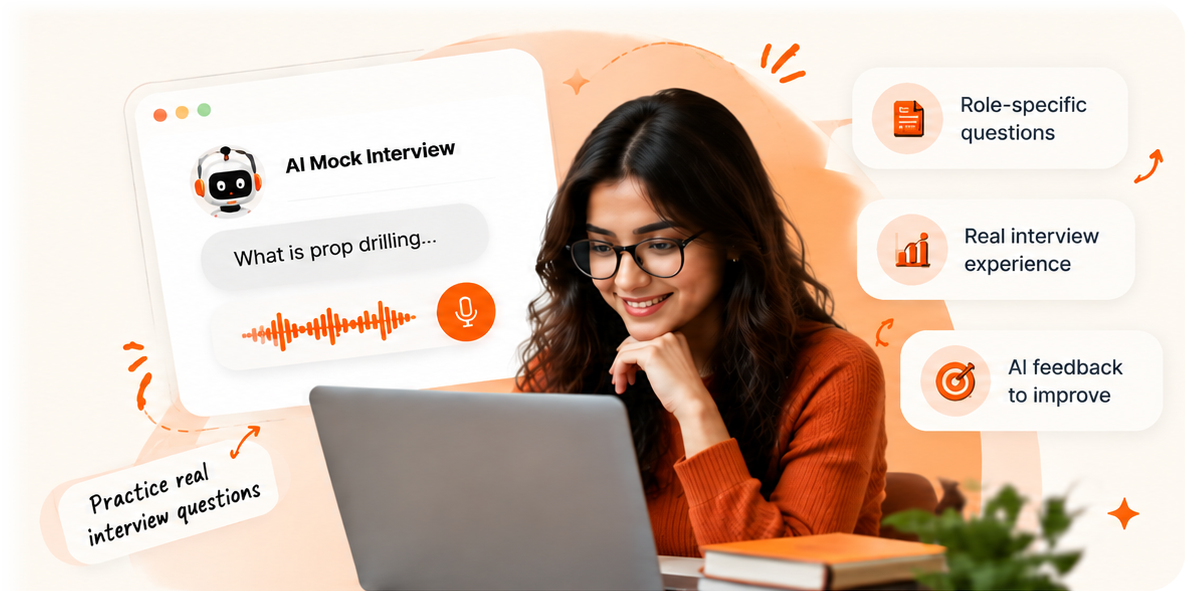
Rather than using AI only to help employers screen candidates, Zepcruit also provides free tools for candidates, including interview practice.
| For recruiters | For candidates |
|---|---|
| AI-powered candidate evaluation | Pocket friendly interview practice |
| Faster screening | Interview preparation |
| Structured assessments | Free personality profile test |
The idea is simple: the employer gets better hiring tools while candidates get something useful from the platform too.
That matters because hiring works better when both sides get something out of it. Candidates get a chance to prepare before their interview, and recruiters get to check applicants faster using AI.
How to Choose AI Recruitment Software for a Growing Team
Before choosing a platform, check these points.
- Is the pricing clear?
You should know what you are paying for.
Check whether the platform charges by user, job, candidate, assessment, credit or contract.
- Can you start small?
A small company may not need an enterprise plan.
Look for a platform that lets you start with your current hiring needs and increase usage later.
- Does it solve a real problem?
Do not buy AI recruitment software just because it has many AI features.
First, identify the task that takes the most time.
- Does it keep humans involved?
The software should only help recruiters and hiring managers, not replace them.
The software can help with screening and sorting, but the final hiring decision must always be taken by a recruiter or hiring manager.
- Is the candidate experience good?
Candidates are also part of the hiring process.
Check whether the system is easy to use, gives clear instructions and keeps candidates informed.
- Can you measure the result?
The platform should help you understand whether it is actually saving time or improving your hiring process.
Frequently Asked Questions
Try It Yourself
Experience Zepcruit's AI mock interview before real one.
No demo call. No recruiter pitch. Just practice.