
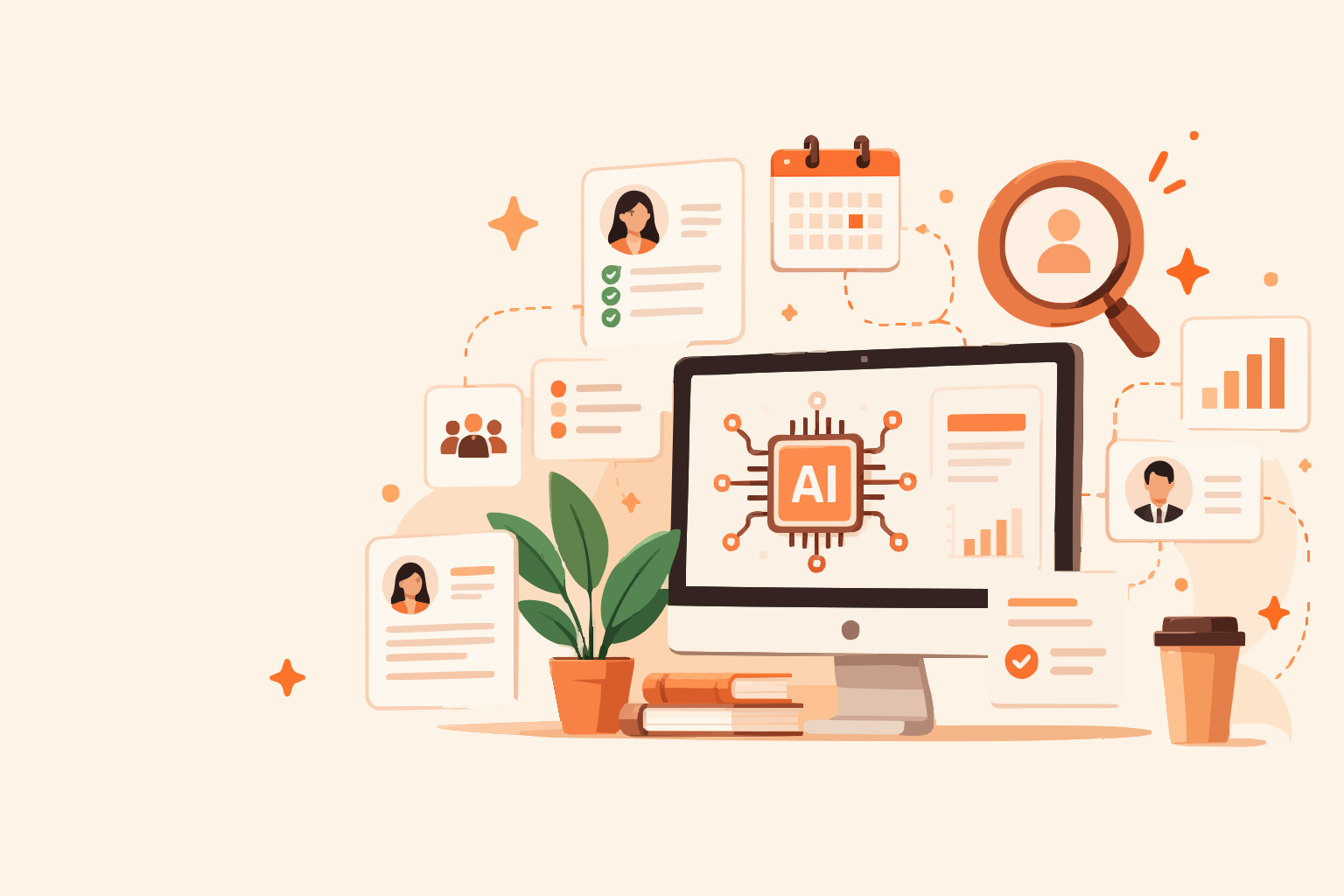
You can get hundreds of applications for a single job post in India, and each one of them needs your attention. But it takes days to read that many CVs manually, and eventually strong candidates can get lost along the way.
AI resume screening eases that work for a recruiter. It reads each resume, compares it with your job description, and ranks the best candidates first. But the final decision remains in your hands.
That is why more hiring teams now use AI CV screening, a type of CV screening software which does away with the most time-consuming job in a recruiter's life.
What Is AI Resume Screening?
AI resume screening is software that reads a resume. It understands what is written in it. Then it ranks all the candidates by how well they match your job.
In India, we usually say CV, not resume. But both words mean the same thing. So AI CV screening and AI resume screening are the same.
AI resume or CV screening software works as a helper for your first round. It reads every application, which you don't have to do manually.
Your basic applicant tracking system (ATS) mostly matches keywords. Suppose your job post says "project management" and a resume says "managed projects". A simple keyword search may miss that match.
How Does AI Resume Screening Work?
Most tools follow the same four steps. Here is what happens between the moment you upload a resume and the moment you see a ranked list.
- Parsing the resume
First, the software opens each file and picks out the main details, like name, skills, past jobs, education and dates. Now the good part. It does not matter if each candidate has formatted the resume differently.
A messy document becomes a neat, simple form. After that, comparing one candidate with another is very easy.
- Understanding skills and context
Next, the software works out what the words mean. It knows that "Excel", "MS Excel" and "spreadsheets" are closely related. It also checks how the person actually used a skill, instead of only checking whether the word appears.
This is where AI CV screening is different from a simple keyword search. Let's look at an example.
Say you need "customer service", and a resume says "helped shoppers find products and fixed billing complaints". A keyword search will find no match. But AI can see that helping shoppers and fixing complaints may show the same skill.
The same idea works for other skills as well. A resume that says "handled hiring drives" can match a job that asks for "recruitment experience".
- Scoring against the job description
Then the software scores each resume by comparing it with your job description. Skills, experience and role fit all count. You can usually tell the tool which requirements matter most to you.
A resume scores high because it meets most of your key requirements. On many tools, you can mark some skills as must-have and others as nice-to-have.
- Ranking for the recruiter
Finally, the software sorts candidates for you from best match to weakest match. Good tools will often give you a short reason for each score. This reasoning, or rationale, helps with validation and also builds a recruiter's confidence when making a decision.
You don't have to start reviewing CVs one by one. Contextual CV ranking helps you identify the most relevant candidates first, so you can focus your time where it matters.
The ranking is a starting point, not a final decision. It helps reduce the effort of screening hundreds of CVs while keeping you in control. You can always review lower-ranked CVs, take a closer look, and make your own hiring decisions.
Benefits of AI Resume Screening
If you use it well, AI resume screening helps you in four clear ways. Here they are:
- Speed
The software reads CVs much faster than you can. You get your shortlist sooner, so good candidates do not accept offers from other companies while waiting for you. It saves a lot of time overall if you are hiring for many roles together.
- Consistency
Every CV is checked against the same requirements. When you are tired, you may read CV number 200 differently from CV number 2, but software doesn't do that. It applies the same checks every time. It also helps you explain why one candidate was shortlisted, and another was not.
- Overlooked candidates
As per LinkedIn India, 71% of recruiters using AI said they found candidates they would have missed on their own. Think about it. Someone very capable may send a plain CV, and it gets ignored. A good-looking CV does not always mean a good candidate.
- Time for interviews
When the software reads the CVs, you can use your time to talk to candidates and judge the right match. Only people can do this work well, and hiring decisions are really made here.
According to Gartner, 39% of candidates used AI during job applications, and 54% of those candidates used it to create CV content.
Nowadays more recruiters are using AI, and so are job seekers. So, a well-written CV may not always reflect a candidate's actual abilities. This is where AI interviews can help assess practical skills, communication, behaviour and cultural fit.
Zepcruit's AI Interview also provides predictive insights into future performance, role suitability and hiring confidence, helping recruiters make more informed decisions.
These benefits make automated resume screening a useful first step. They do not replace your judgment. They give you more time to use it.
AI Resume Screening in India
If you hire in India, you already feel the pressure of high application volume. Deloitte published a report called India Campus Workforce Trends 2026. The report surveyed 257 organisations across 505 campuses. Here is what it found:
- 86% of organisations said that AI is changing how they recruit. This includes newer AI that can take action on its own.
- 72% of organisations use AI for resume screening.
It was a campus-hiring survey, so it speaks most clearly about fresher hiring.
LinkedIn India's data shows the same pressure:
- About 74% of recruiters say they struggle to find qualified candidates.
- More than half of these recruiters say AI-generated applications are one reason for this.
- Around 80% of recruiters plan to use more AI in the future.
Here is what this means for you. Candidates now use AI to write and send more applications. So you receive more CVs than before. And that's why many recruiters answer by using AI to read these CVs.
If you have a growing team, the challenge is often simple. You receive a lot of CVs, but you have only a few recruiters to go through them. A resume screening tool can read every CV in the same way. This makes your work a little easier, helps you keep up, and you don't have to read CVs late into the night.
Both sources point in the same direction. More hiring teams in India are using AI to handle a high volume of CVs.
Limitations of AI Resume Screening (and How to Handle Them)
AI screening is useful, but it is not perfect. Here are three limits you should know, and a simple fix for each.
- Bias
AI learns from data that we create, so it can pick up unfair patterns. Researchers at the University of Washington ran a study at AIES 2024. They tested some open-source models in a research setting. The models favoured white-associated names 85.1% of the time. The models favoured female-associated names only 11.1% of the time.
In the study, the models never favoured Black male names over white male names. In a separate UW study, 528 participants worked with simulated AI systems. In the study, the AI gave advice about which candidate to pick. Some AI advice was unfair to one group of people. The participants saw this advice, and then they made the same unfair choices.
For example, if the AI preferred white candidates, the participants also preferred white candidates. This happened up to 90% of the time. When there was no AI, the participants chose all candidates at equal rates.
So you should keep human review in your process. You should also check a sample of ranked CVs regularly.
- Over-reliance on keywords
Some tools still depend on exact words. For example, a tool looks for the word "sales", but a candidate writes "business development". The tool does not see these two words as the same thing. So the tool can miss good candidates who describe their work in a different way.
Here is a simple fix. First, write your job description with clear and structured criteria. You can list the must-have skills in one group and the nice-to-have skills in another. Then, test the tool on a few CVs that you already know well. You already know which of these candidates are good, so you can easily see if the tool misses any of them.
- Unusual career paths
Some candidates change their field. Some take a career break. Some learn their skills on the job. The tool may give these candidates a lower score than they deserve. For example, a woman takes a two-year break to look after her child. The tool sees the gap in her CV and gives her a low score, even though she is a very good candidate.
However, good tools such as Zepcruit's have buffers and thresholds, and would only score such candidates low when the pattern repeats consistently.
You should look beyond the top of the list yourself. You can also set the tool to flag such CVs. The tool should not reject these CVs. When the tool points out a CV, you can read it and decide.
How to Choose AI Resume Screening Software
When you compare automated CV screening software, please test each tool on your own real CVs first. Then check these five things.
- 1Can the tool show how it gave the score? Open one CV and check why it got a high or low score. Then you can trust the result. You can also tell your team the exact reason for that score.
- 2Who takes the final decision? The tool should only sort the CVs and mark some of them. It should never reject a CV on its own. The final decision must be in your hands.
- 3What does the tool do with your data? Candidates write private details on their CVs, like phone numbers and home addresses. So ask the company three questions:Where do you keep these CVs? For how long do you keep them? Who can see them? A good company gives you clear answers to all three.
- 4Does the tool integrate with your ATS? Most companies use an Applicant Tracking System to keep all candidate details in one place. Check if the new tool works with your ATS, so your team does not need to copy and paste data again and again.
- 5Is the price clear? Ask for the full price before you start. Some companies charge for each user. Some charge for each CV. Choose a tool with a simple price, so you do not get a surprise bill later.
If a company cannot answer these five questions clearly, then look at some other tool.
AI Resume Screening with Zepcruit
Zepcruit is an AI tool that helps recruiters find and shortlist the right people quickly.
You pay with Zepcoins, and the maths is very simple: 1 Zepcoin = ₹1.
| Action | Cost |
|---|---|
| Free credits on signup (new recruiters) | 500 Zepcoins |
| Unlock a CV | 30 Zepcoins (₹30) |
| Unlock + rank a CV | 35 Zepcoins (₹35) |
Your data is safe. It is stored on secure cloud servers compliant with ISO 27001 and SOC 2 for data security. The data is also encrypted in transit as well as at rest.
It also works with what you already use. Zepcruit connects to your ATS through APIs, so you can carry on with your usual work.
You can try it for free too. With 500 free Zepcoins, you can test it on your own CVs first and then decide if you like it.
Frequently Asked Questions
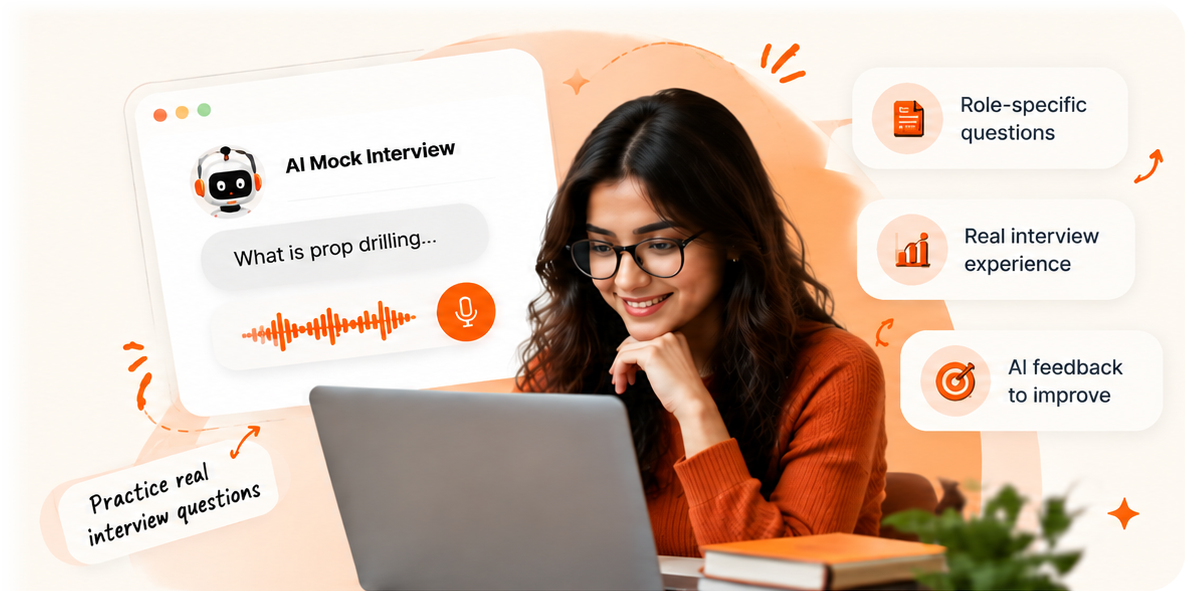
Try It Yourself
Experience Zepcruit's AI mock interview before real one.
No demo call. No recruiter pitch. Just practice.